
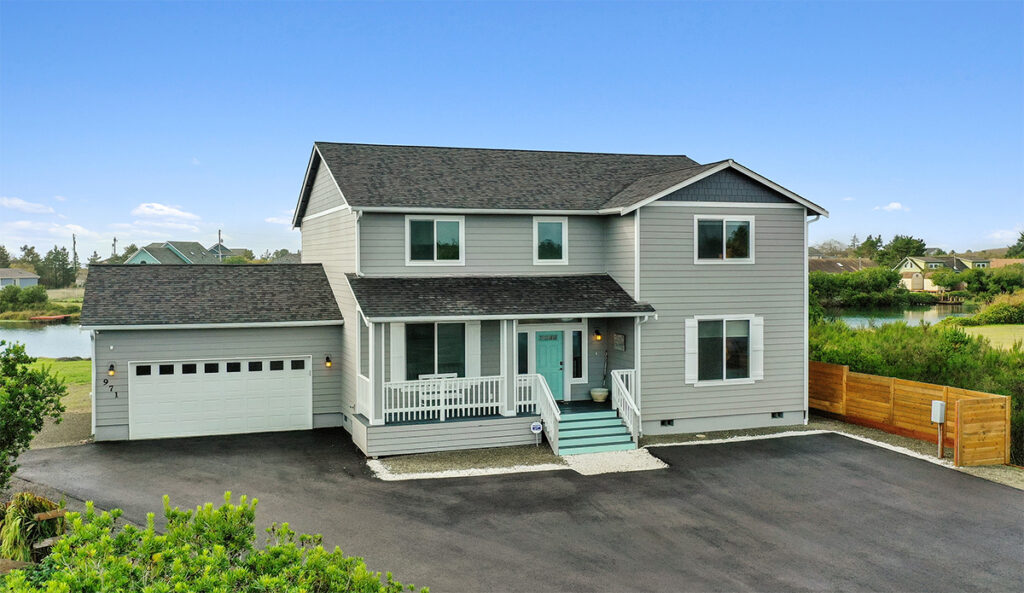
With the rise in home prices, the goal of owning a home seems out of reach for most people. With HiLine Homes, we make affordable homeownership possible.
Our unique approach enables homeowners across the Pacific Northwest to contribute their own labor through our list of Homeowner Participation Items. Through this approach, homeowners access equity-building opportunities. Giving them the advantage of increasing the value of their custom homes once construction is complete.
At HiLine Homes, our affordable housing opportunities enable families to take an active role in bringing their new home to life. With nearly 30 years of experience in custom homebuilding, this model has helped hundreds of families achieve homeownership with confidence and financial stability.
Phase 1: Getting Started—Permits, Insurance, and the Job Site
As you begin your sweat equity journey, there are essential responsibilities that help set the foundation for your build. These early steps play a crucial role in managing costs and establishing your equity position from the outset. By taking an active role in securing permits and required insurance, homeowners contribute meaningful value to the overall project and help keep the building process moving smoothly.
- Item #1: Permits
Construction cannot begin without approved permits, making this the essential first step in the homebuilding process. Before any site work or construction activity can occur, all required permits must be obtained through the appropriate City or County Building Departments to ensure the project meets local safety, zoning, and construction standards.
As the homeowner, you are responsible for identifying and securing the permits required for your specific property. To help you stay on track, HiLine Homes provides a Who to Call List, a call list that contains trades people who have successfully helped our homeowners in the past, along with region-specific resources to guide you to the correct building departments and permit submission portals. Your dedicated Pre-Construction Associate is available throughout this phase to help you navigate next steps, answer questions, and maintain momentum on your other homeowner participation tasks.
By taking an active role in the permitting process, you reduce administrative costs while building equity and confidence in your home from the very beginning.
- Item #2: Insurance
Through their assistance, they can simplify the financial decision-making process, allowing you to move forward confidently in building your new home.
- Homeowner Insurance: This policy must reflect the full insurable value of your completed home, as this coverage supports the long-term security and financial value of your property.
- Course of Construction (Builder’s Risk) Insurance: The builder’s risk insurance is mandatory and must be in place before construction can begin.
Ensuring proper insurance coverage is in place safeguards both the investment and the equity contributions being built through homeowner participation.
- Item #3: Temporary Power & Water
Securing temporary power and water access on the build site is a crucial homeowner responsibility. As it directly supports the progress of construction, these titles must be nailed and active before foundation work can begin. They are also essential resources for operating tools, mixing concrete, and maintaining a safe and functional work environment.
For this participation item, homeowners must set up a temporary water accessible within 50 feet of the home site.
For temporary power, the utility must be set up within 70 feet of the foundation with at least two 20-amp exterior GFI outlets available.

- Item #4: The Portable Necessity
A portable toilet must be placed on the job site before the start of construction. This requirement is essential for maintaining worker sanitation, ensuring site cleanliness, and complying with Occupational Safety and Health Administration (OSHA) standards.
The homeowner is responsible for arranging the rental, delivery, and maintenance of a portable toilet. A lack of a portable can also lead to regulatory compliance issues and incur penalty fees.

Phase 2: Preparing Your Land for the Foundation
Before the first boards are placed or concrete is poured, the build site must be prepared appropriately. This phase offers a significant opportunity for equity through building the value of your land.
By taking responsibility for clearing, leveling, and ensuring access to the site, homeowners make substantial equity contributions while setting the stage for a smooth building process.
- Item #5: Site Preparation
Proper site preparation ensures a smooth and safe start to construction. Working with local, cost-efficient partners can still help increase your home’s equity while reducing overall expenses.
Clearing and Excavation: The homeowner is responsible for all preliminary site preparation, including:
- Selecting the right excavator who can help navigate drainage and items listed below.
- Deciding what drainage measures will be necessary for the site, such as footing and downspout drains, and coordinating excavation to ensure proper installation after the foundation is in place.
- The removal of trees, debris, and other existing structures to make way for the new home.
- Coordinating or completing excavation of the foundation area and utility trenches.
- Managing backfill around the foundation once it has been poured.
Achieving a Proper Building Base: The success of the entire structure depends heavily on the stability and preparation of the build site. Its requirements include the following to project the future home’s structural integrity and ensure the warranty remains valid:
- A level floor for the foundation, within 3 inches of level grade, to ensure proper foundation placement.
- The build area must be cleared 4 feet beyond the foundation lines in every direction to allow room for workers, equipment, and foundation forms.
- For sloped sites, a stepped foundation may be necessary.
These careful preparations support the long-term durability and value of the home, reflecting a meaningful sweat equity accomplishment.
- Item #6: Ensuring Access for Quality Construction
A homeowner must ensure that their lot allows for access by trucks, subcontractors, materials, and equipment. To do this, they must take the following measures as part of the HiLine Homes construction process.
Driveway and Staging Areas: To provide access to the lot. A homeowner must set up a driveway and a space for materials and the labor force.
- The homeowner must create an all-weather driveway from the public road to the building site to ensure safe and efficient daily access to the job site.
- A designated staging area is also required for materials, equipment, and safe maneuvering of contractors and subcontractors.
- Overhead obstructions, such as low branches or utility lines, must be removed to allow for the delivery of long building materials and the operation of cranes or pumps.
Truck Access Requirements: Construction vehicles such as concrete mixers, lumber delivery trucks, and earth-moving equipment must be able to enter, access, and exit the property easily.
- The driveway must reach all the way to either the garage location or the main staging area.
- To avoid unsafe reversing or delay, a hammerhead or turnaround area may be required near the foundation.
- Clear and reliable access prevents costly delays and helps keep the building schedule on track.
- Item #7: Permanent Utilities and Drainage
Once the land is prepared and work is underway, the next key homeowner responsibility involves securing permanent utility services and ensuring proper site drainage. These tasks are essential for both the completion of the construction process and the long-term performance and durability of the home.
Taking ownership of these responsibilities ensures efficient progress, helps manage total building costs, and contributes to the homeowner’s overall equity contributions.
Securing Services: During construction, the homeowner is responsible for coordinating and financing the installation and final connection of all required permanent utilities. These services must be installed, inspected, and approved before a Certificate of Occupancy can be issued, which grants permission to occupy the home legally. This includes:
- Water Supply: Whether through a municipal water system or a private well, water services must be fully connected and operational before move-in.
- Electrical Service: The power company’s final meter installation and service hookup must be scheduled, coordinated, and completed by the homeowner.
- Sewer or Septic System: Homeowners must arrange for septic installation or sewer connection, depending on local availability and property needs.

Moisture Control is Key: We advise homeowners to discuss effective drainage based on the needs of each property with your excavation contractor. Drainage is essential to protecting the foundation. It maintains structural integrity and ensures the long-term health of the home. Moisture management systems must be thoughtfully planned and properly installed. Some key components include:
- Footing Drains: Gravel and perforated pipe installed around the base of the foundation to direct subsurface water away from the home.
- Downspout Drains: Piping that carries roof runoff away from the foundation to help prevent erosion, pooling, and water intrusion.
- Curtain Drains (when applicable): Trenches installed uphill on sloped lots to intercept and divert surface water before it reaches the build site.

Phase 3: The Finishing Touches That Build Equity
As your home nears completion, the final stages of finish work offer meaningful opportunities to build sweat equity and personalize your new space. These tasks not only contribute to the overall value of your home but also provide one of the most rewarding parts of the building journey. It transforms construction into a space that genuinely feels like your own. By taking on these finishing responsibilities, homeowners add both financial equity and emotional connection to their completed house.
- Item #8: Interior and Exterior Finish Work
Painting is one of the most significant labor-sweat opportunities in the homebuilding process. The homeowner is responsible for all interior and exterior painting, including preparation, priming, and finishing. This includes:
- Interior walls, ceilings, and trim*
- Interior and exterior doors*
- Exterior siding, trim, and eaves
Because painting labor is typically a significant cost in residential construction, completing it yourself results in substantial equity contributions, allowing you to save thousands of dollars. Taking time to prepare surfaces properly and apply clean, even finishes ensures lasting quality and contributes to the long-term beauty and durability of your home.
*Only applicable when homeowners select certain trim and door finishes.
- Item #9: Appliances and Personalization
The final touches that transform a house into a comfortable, livable home come from installing essential appliances and personal selections. The homeowner is responsible for purchasing and installing a refrigerator, oven/range, hood vent, dishwasher, washer, dryer, and other appliances for daily living.
This responsibility allows families to choose models that align with their lifestyle, budget, and design preferences. Selecting your own appliances ensures the home reflects your needs. It keeps appliance costs out of the builder’s contract, directly contributing to sweat equity.
- Item #10: Flatwork, Decks, and Final Cleanup
The final stages of exterior work play a significant role in both the visual appeal and everyday functionality of your home. The homeowner is responsible for coordinating and completing flatwork, including:
- Porches
- Decks, including stairs and railings
- Patios
- Sidewalks
- Any additional exterior concrete, paved surfaces, or landscaping
This work typically requires coordinating skilled subcontractors, such as concrete finishers or deck builders, and may involve sourcing materials and managing installation schedules. Completing or managing these tasks adds significant value, enhances curb appeal, and represents another meaningful sweat equity opportunity in the building process.
- Item #11: Ready for Move-In
Before the home can undergo its final inspection or be welcomed by your family, the homeowner is responsible for conducting a thorough cleanup of both the interior and exterior of the build site. This includes:
- Removing construction debris, packaging, and leftover materials
- Performing a thorough cleaning of interior surfaces from floor to ceiling
A clean, well-organized site not only supports a positive final inspection but also allows the finishing touches to begin smoothly, such as landscaping, décor, and setup. Final cleanup marks the transition from construction project to livable home.

Transforming Effort into Equity
By fulfilling the full range of homeowner responsibilities, homeowners actively shape both the outcome and equity of their future home.
Our approach can help homeowners save significantly on labor and administrative costs. By taking an active role in the building process, they can grow their home’s equity before it’s move-in ready. HiLine homeowners can take pride in contributing to a house built with care, intention, and craftsmanship.
Ready to take charge of your build and maximize your investment?